
Video game retailer GameStop launched a public beta of its NFT marketplace on July 11, 2022, joining a crowded race to make digital collectibles a normal part of gaming commerce. The announcement came while many consumer brands were experimenting with blockchain products, even as demand for NFTs had begun to fall from the highs of the previous year.
Historical news event: 2022-07-11. Retrospective report prepared November 2026.
What GameStop launched
GameStop described the site as a non-custodial marketplace built on Ethereum layer-2 technology, where gamers, creators, collectors and other community members could buy, sell and trade NFTs. Customers connected their own digital wallets, such as the recently launched GameStop Wallet, rather than relying on an account controlled by the retailer. That's what "non-custodial" means: the user, not the company, holds the keys, one of the main types of crypto wallets.
The marketplace ran on Loopring, a layer-2 network built on Ethereum that uses zero-knowledge proofs to bundle transactions and cut fees, Cointelegraph reported on launch day. A limited beta had opened on Loopring on March 23, 2022, but it only let early users set up profiles and make deposits, according to Decrypt. The July release opened trading to the public.
The July debut was explicitly a beta. GameStop said it would expand into "additional categories such as Web3 gaming, more creators and other Ethereum environments" over time. At that point the promise was a new kind of retail storefront rather than a finished in-game asset economy.
Why GameStop entered NFTs
A recognizable retail brand had possible advantages in digital collectibles. GameStop already served gamers who traded physical games, limited-edition merchandise and collectibles. A move into tokens might connect those habits to digitally scarce goods and, eventually, items used inside video games.
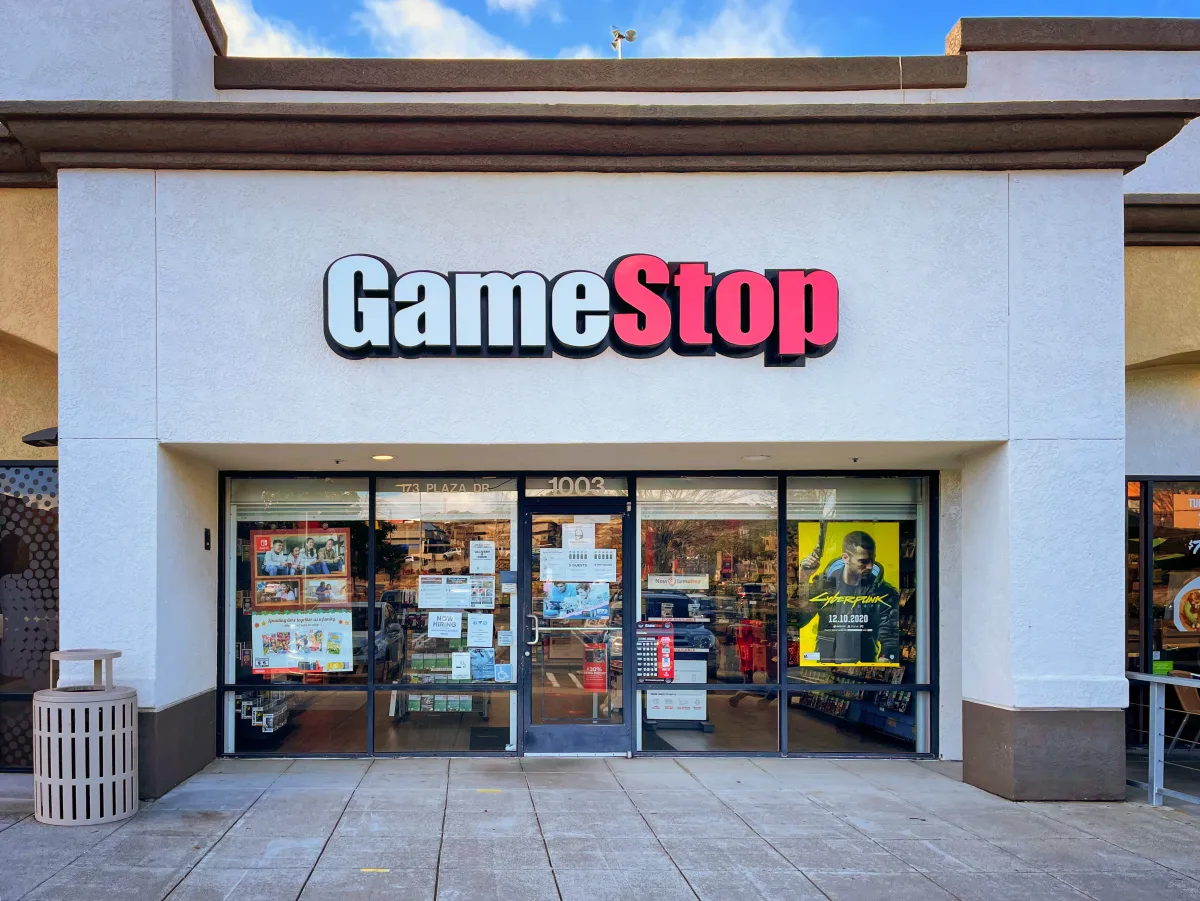
Photo: Will Buckner / Wikimedia Commons, CC BY 2.0
Then-CEO Matt Furlong had framed the push as part of the company's turnaround. On GameStop's March 17, 2022 earnings call, he said the company had "invested in a dedicated blockchain team and new capabilities" to build initiatives such as "our NFT marketplace, which we expect to launch by the end of the second quarter." He described the strategy as "starting to embrace, rather than run from, the new frontiers of gaming."
The marketplace was one piece of a wider plan. GameStop launched its self-custodial wallet as a browser extension in May 2022, and earlier that year it had announced a partnership with Immutable, the gaming-focused Ethereum scaling company. Those steps suggested its NFT ambitions went beyond static images to markets for tradable game assets.
The later outcome
On October 31, 2022, GameStop announced the official launch of the marketplace with ImmutableX, giving US customers, including members of its PowerUp Pro loyalty program, access to Web3 games and NFT gaming assets with what it called gas-free minting and trading. But the company's Web3 strategy then shrank. It shut down its crypto wallet in 2023, citing regulatory uncertainty, and in January 2024 it said the NFT marketplace would wind down on February 2, 2024.
GameStop pointed to "the continuing regulatory uncertainty of the crypto space," The Block reported on January 13, 2024. The Block also noted that the marketplace had made little impact on NFT trading volumes and that its X account had been quiet since September 2023. That uncertainty didn't ease for another two years, until US regulators issued joint guidance in 2026 that most crypto assets aren't securities.
What the closure meant for collectors
That closure is central to any look back at the 2022 launch. GameStop's marketplace was a real product from a public company, not a phantom project. Its shutdown showed how hard it was to build a lasting consumer business on NFTs alone. Other big names reached similar conclusions, from Starbucks' Odyssey loyalty beta to NFT trading platforms such as Blur, which later announced its own closure.
The tokens didn't disappear with the website. Because the NFTs were recorded on public blockchains, holders could keep them and, where supported, sell them on other marketplaces after GameStop's storefront closed. The difference between a token's continued existence and a website's lifespan is one of the most important ideas for collectors to understand.
The GameStop experiment is now a chapter in gaming history: a large retailer tested whether collectible ownership could translate to Web3, then chose to leave the business. It's more useful as a record of industry experimentation than as a success story, and a reminder that the biggest NFT venues, such as OpenSea, had to keep reinventing their technology to stay relevant.
Frequently asked questions
When did GameStop launch its NFT marketplace?
GameStop launched the public beta of its NFT marketplace on July 11, 2022. A limited beta for profiles and deposits had opened on Loopring on March 23, 2022, and an Immutable-powered version launched on October 31, 2022.
What blockchain did the GameStop NFT marketplace use?
It was built on Ethereum layer-2 technology, starting with Loopring and later adding ImmutableX for gaming assets.
When did GameStop close its NFT marketplace?
GameStop announced in January 2024 that the marketplace would wind down on February 2, 2024, citing continuing regulatory uncertainty in crypto.
What happened to NFTs bought on GameStop's marketplace?
The NFTs stayed on the blockchain after the site closed. Holders could keep them and, where supported, trade them on other marketplaces.
Sources
- GameStop: GameStop Launches NFT Marketplace (July 11, 2022)
- GameStop: GameStop's NFT Marketplace Launches with ImmutableX (October 31, 2022)
- The Motley Fool: GameStop Q4 2021 earnings call transcript (March 17, 2022)
- Cointelegraph: GameStop NFT marketplace now live and powered by Loopring L2 (July 2022)
- Decrypt: GameStop launches Ethereum NFT marketplace beta on Loopring (March 2022)
- The Block: GameStop axes NFT marketplace, citing regulatory uncertainty (January 13, 2024)
Featured image: GameStop, via the archived GameStop NFT marketplace
Frequently asked questions
When did GameStop launch its NFT marketplace?
GameStop launched the public beta of its NFT marketplace on July 11, 2022. A limited beta for profiles and deposits had opened on Loopring on March 23, 2022, and an Immutable-powered version launched on October 31, 2022.
What blockchain did the GameStop NFT marketplace use?
It was built on Ethereum layer-2 technology, starting with Loopring and later adding ImmutableX for gaming assets.
When did GameStop close its NFT marketplace?
GameStop announced in January 2024 that the marketplace would wind down on February 2, 2024, citing continuing regulatory uncertainty in crypto.
What happened to NFTs bought on GameStop's marketplace?
The NFTs stayed on the blockchain after the site closed. Holders could keep them and, where supported, trade them on other marketplaces.
Last updated NOV 4, 2026