Doodles, the NFT brand known for its pastel cartoon characters, wants its artwork to become the starting point for stories its fans build together. In an interview published by OpenSea on April 25, 2025, co-founder and CEO Scott Martin, the artist known as Burnt Toast, described DreamNet, an AI storytelling platform where people could create characters, add to shared story worlds and get credit for what they contribute.
Historical news event: 2025-04-25. Retrospective report prepared November 2026.
DreamNet wasn't new that day. Doodles had announced it on X on March 27, 2025, as a platform "powered by $DOOD," the brand's planned token. The April interview was the fullest explanation yet of how Martin saw it fitting into Doodles' future. Calling it a launch would blur an important line: an announced concept, a demo and a service anyone can use are three different milestones.
A new CEO and a reset
The interview came three months into Martin's tenure as chief executive. He took over from former Billboard executive Julian Holguin on January 28, 2025, promising on X a vision with a strong bias for risk, disruption and radical transparency.
In the OpenSea conversation, he framed the job as a return to basics: creativity first, community first, and fewer complications around what makes Doodles special. He described a business that had grown from three young founders online into a company with board meetings and calls with McDonald's marketing chiefs, and said the next chapter would be defined by real-world spaces, physical products, a community token and DreamNet.
The problem DreamNet is meant to solve
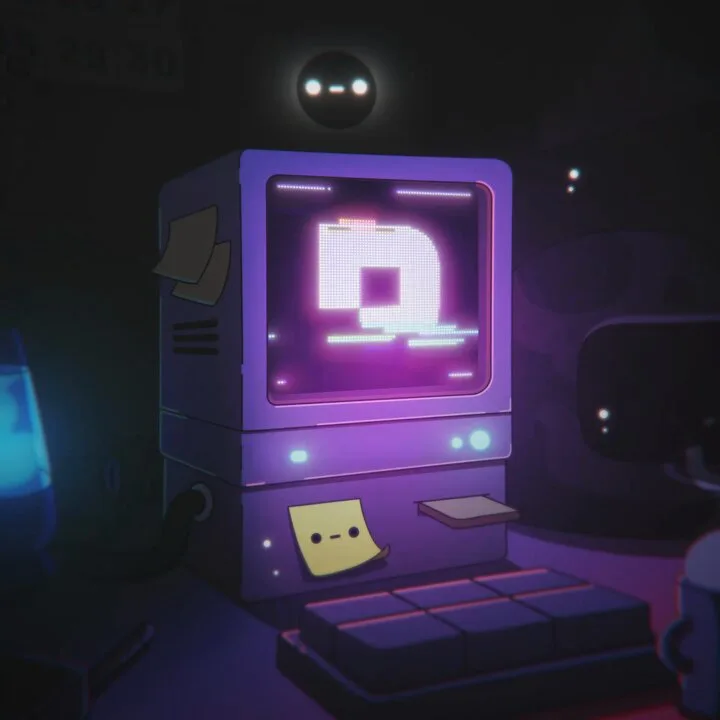
Image: Doodles
Doodles' March announcement set out the pitch in one line: "when everything's possible but nothing is remembered, creativity becomes slop." It's a familiar complaint about generative AI. A model can produce an image or a story in seconds, but each output stands alone. Characters lose continuity, story worlds forget their own rules, and contributors rarely get credit when other people build on their ideas.
DreamNet's answer was to give AI storytelling a structure. According to an OpenSea news digest from April 2025, the DOOD token would help track people's contributions, such as characters and settings, and organise fan-made plotlines into a system an AI could use. In theory, that creates a record of who added what, and a world that keeps its history as it grows.
Martin's description
Asked how people might use the DOOD token beyond governance, Martin pointed straight to DreamNet. "It's a self-evaluating story-building platform with AI avatars," he told OpenSea.
He also said Doodles' own characters were only the start. "Doodles is the first universe being explored through it. But it's not just limited to our IP, it's an expansive platform that will welcome new communities," he said.
Martin cast the token as the glue between these parts of the business. "This isn't just a token. It's an unlock mechanism," he said, adding that it would let holders take part, earn and help steer the Doodles universe. He also linked the timing to US policy: Doodles had always wanted a token, he said, but launching one from US soil had been difficult until the regulatory climate shifted.
Doodles beyond NFTs
Much of the interview had nothing to do with AI. Martin talked about the eight-month lead times for vinyl figures, the struggle to get printers to match Doodles' exact pastel colours, and why the brand avoids current tech references in its art so the work doesn't date. He also said Doodles isn't aimed at children, arguing that a brand trying to mix adult humour with child-safe content ends up working for no one.
That context matters for DreamNet. Martin presented it as one part of an entertainment brand alongside toys, events and partnerships, not as a stand-alone crypto product.
The appeal and the open questions
The appeal is easy to picture. A fan could take a Doodle character as the starting point for an adventure that others continue, with each person's part recorded. It could bring artists, writers, gamers and collectors into one experience without asking them all to become blockchain experts.
The harder questions are about rights and quality. An onchain record of a contribution doesn't, by itself, settle who owns the copyright in a shared character. AI output also needs safeguards against copying other people's work, drifting out of continuity and drowning good ideas in spam. The interview didn't go into how DreamNet would handle those problems.
What came next
Doodles had announced the DOOD token in February 2025, and the token went live on Solana on May 9, 2025, with Doodles linking it closely to DreamNet. As of the April interview, though, the news was a creative strategy, not evidence of a working AI storytelling economy.
Doodles wasn't the only NFT brand leaning into new formats that year. Pudgy Penguins was pushing into mobile games with Pudgy Party, and Yuga Labs was building out its Otherside world. The Doodles case is a reminder that NFT franchises may end up being judged by the worlds people enjoy building with them, rather than by the first sale of their art.
Frequently asked questions
What is Doodles DreamNet?
DreamNet is an AI storytelling platform announced by Doodles on March 27, 2025. It was designed to let fans and creators build shared story worlds, with the DOOD token used to track contributions such as characters and settings.
Who is Burnt Toast?
Burnt Toast is Scott Martin, the illustrator and co-founder behind the Doodles NFT collection. He became Doodles' CEO on January 28, 2025, replacing Julian Holguin.
When did DreamNet launch?
Doodles announced DreamNet on March 27, 2025, and Martin described it in detail in an OpenSea interview on April 25, 2025. The DOOD token that powers it went live on May 9, 2025.
Is DreamNet only for Doodles characters?
No. Martin said Doodles was the first universe being explored on DreamNet, but that the platform was meant to welcome other communities too.
Sources
- OpenSea, "In Conversation With Burnt Toast of Doodles" (April 25, 2025)
- Doodles on X, DreamNet announcement (March 27, 2025)
- OpenSea digest covering the DreamNet announcement (April 3, 2025)
- Decrypt, "Ethereum NFT Project Doodles Swaps CEOs After McDonald's Collab" (January 28, 2025)
- The Block, Doodles to launch Solana-based token DOOD (February 13, 2025)
Frequently asked questions
What is Doodles DreamNet?
DreamNet is an AI storytelling platform announced by Doodles on March 27, 2025. It was designed to let fans and creators build shared story worlds, with the DOOD token used to track contributions such as characters and settings.
Who is Burnt Toast?
Burnt Toast is Scott Martin, the illustrator and co-founder behind the Doodles NFT collection. He became Doodles' CEO on January 28, 2025, replacing Julian Holguin.
When did DreamNet launch?
Doodles announced DreamNet on March 27, 2025, and Martin described it in detail in an OpenSea interview on April 25, 2025. The DOOD token that powers it went live on May 9, 2025.
Is DreamNet only for Doodles characters?
No. Martin said Doodles was the first universe being explored on DreamNet, but that the platform was meant to welcome other communities too.
Last updated NOV 8, 2026