Mexico City's Museo Diego Rivera Anahuacalli made room for a very different kind of artwork in August 2026: animated and computer-made pieces shown in dialogue with the museum's architecture, its collection and the legacy of painter Diego Rivera. On August 5, the museum announced Encuentros Digitales Anahuacalli (Digital Encounters), a program of work by 22 digital artists. Among them was "Popol Vuh," a one-of-one animated piece by artist Rebecca Rose.
Historical news event: 2026-08-05. Retrospective report prepared November 2026.
What the museum announced
According to the museum's announcement, the program was driven by 8NAP Art in collaboration with Superchief and Mythaic. It brought together 22 artists from more than ten countries, working in generative art, artificial intelligence, glitch, film, post-photography, stereoscopic 3D and interactive formats. The museum said the works were made specifically for the program and explored technology, myth, memory and Rivera's cultural project.
The pieces were shown in the museum's library during the first week of August, with free entry during opening hours. The museum's notice didn't list the participating artists by name, so the line-up below comes from 8NAP Art's own listing.
A museum built for cultural memory
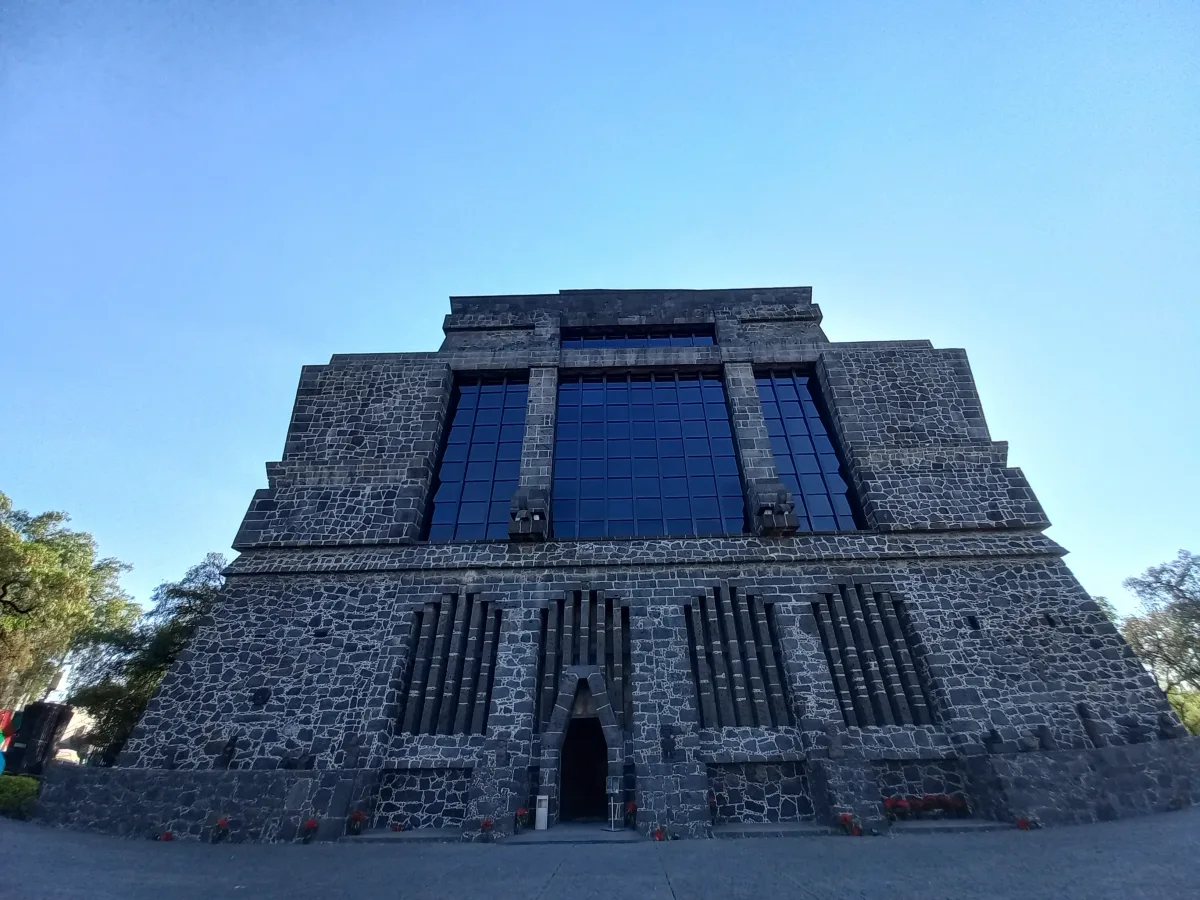
The setting mattered. Anahuacalli was conceived by Rivera to house and display his collection of pre-Hispanic art, and its stone building is designed to echo ancient Mesoamerican architecture. That makes it an unusually evocative place to meet art made with modern software and sold through blockchain-era channels.
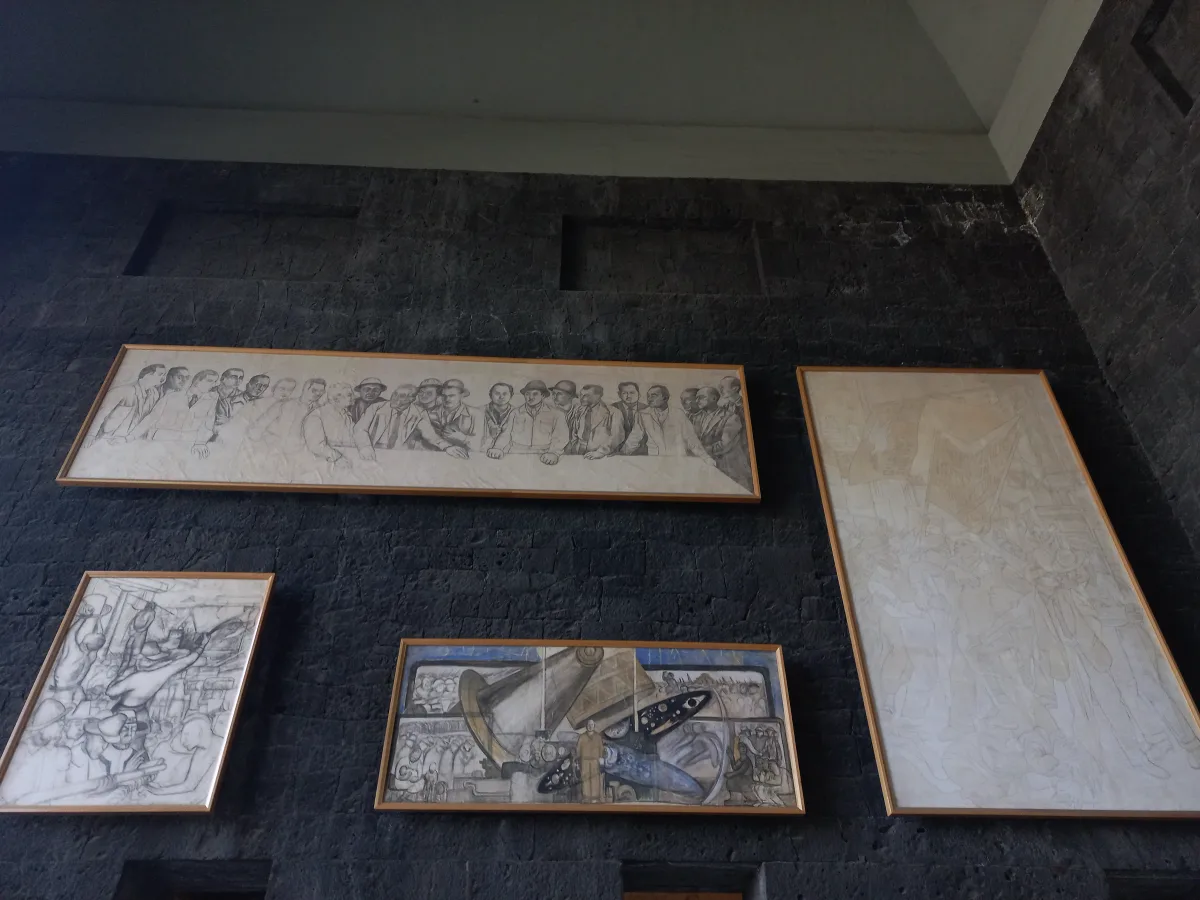
Photo: B.jars / Wikimedia Commons, CC BY-SA 4.0
Rather than treating NFTs as a separate internet trend, the program placed digital work in a building dedicated to preserving and reinterpreting cultural memory. That's a different frame from the price charts and floor-price tables that dominated NFT coverage in earlier years.
What 'Popol Vuh' is
8NAP Art lists Rose's "Popol Vuh" as token #7 in its Digital Mythology: 1 of 1 Series, a set of 12 single-edition works on Ethereum. The listing describes the piece as a "spatially collaged digital animation," made in 2026 and delivered as a widescreen 1920 x 1080 video. The edition page shows it as minted out, with a listed price of 1.5 ETH.
The title refers to the Popol Vuh, the K'iche' Maya book of creation stories. Rivera himself had a link to the text: in 1931 he painted a series of 17 watercolors illustrating it, now held by the Museo Casa Diego Rivera in Guanajuato, according to the Bowers Museum, which showed them in 2015 and 2016.
OpenSea's August 7 digest reported that Rose's piece draws on a moment in Rivera's life when he set a collection of his watercolors free, an idea of letting go that connects art and ownership to the museum's founder. That reading comes from the artist's own framing; we couldn't find an independent account of the specific episode.
Other works in the same series include "Control" by DeltaSauce, based on the three Fates of Greek myth, and pieces by artists including Alkan Avcıoğlu, Vikki Bardot and Laura El.

Image: 8NAP Art
Collected before the debut
Rose announced the sale on X on August 3, two days before the museum's notice. "Proud to announce "Popol Vuh" was collected by @redbeardnft via private acquisition!" she wrote. The buyer is a collector named Benny, known in the NFT community as Redbeard.
Rose used the same post to explain why she valued the match. "True art patrons support culture in every space they inhabit," she wrote, adding that "Benny champions the arts not just through collecting, but through every day advocacy and community connection." OpenSea's digest noted that the two had met at in-person NFT events where he'd spoken on panels.
Rose is a digital collage artist whose CV lists NFT releases on platforms including SuperRare, Foundation and OpenSea going back to 2021.
Why the exhibition matters to NFTs
A digital artwork can be compelling without involving tokens at all. What the blockchain added here was a public record of a limited edition, and a way for a collector to support an artist while the work still reaches a general museum audience. Most visitors to the library wouldn't have needed a wallet, an exchange account or any interest in crypto to watch the piece.
It's also worth being clear about what the token doesn't do. Owning the NFT doesn't confer any stake in the museum or its collection, and buying an NFT isn't automatically the same as owning the copyright to the image. Those rights depend on the license terms attached to each sale, a point the Moonbirds CC0 debate made very public back in 2022.
The program also showed that public engagement with digital art doesn't have to start with a speculative mint. It can start with a moving image on a screen and a conversation about why someone made it. Museums have been moving in this direction for a few years, from MoMA adding CryptoPunks and Chromie Squiggles to its collection to the AI art exhibition by Nathaniel Stern and Sasha Stiles in Kansas. Earlier in 2026, the NFC Summit in Lisbon took a similar approach, staging digital art across an old factory.
For a field often covered through market cycles, Anahuacalli's program was an art story first.
Frequently asked questions
What was Encuentros Digitales Anahuacalli?
It was a digital art program at the Museo Diego Rivera Anahuacalli in Mexico City, announced on August 5, 2026. It showed work by 22 artists from more than ten countries in the museum's library, organized by 8NAP Art with Superchief and Mythaic.
What is Rebecca Rose's 'Popol Vuh'?
It's a 2026 animated digital collage by Rebecca Rose, sold as a single-edition NFT in 8NAP Art's Digital Mythology series on Ethereum. Its title refers to the K'iche' Maya creation text, which Diego Rivera illustrated in a 1931 series of watercolors.
Who bought 'Popol Vuh'?
Rose said on August 3, 2026, that the piece was collected in a private sale by Benny, a collector known online as Redbeard. The price of the private sale wasn't disclosed in her post.
Did visitors need crypto to see the exhibition?
No. The museum said the program was free to visit during opening hours, and the works were shown on screens in the library.
Sources
- Museo Anahuacalli: Encuentros Digitales Anahuacalli announcement (August 5, 2026)
- 8NAP Art: Digital Mythology 1 of 1 Series, including 'Popol Vuh'
- Rebecca Rose on X, August 3, 2026
- OpenSea: The OpenSea Digest, August 7, 2026
- Bowers Museum: Popol Vuh watercolors of Diego Rivera
- Rebecca Rose: Artist CV
Featured image: B.jars / Wikimedia Commons, CC BY-SA 4.0
Frequently asked questions
What was Encuentros Digitales Anahuacalli?
It was a digital art program at the Museo Diego Rivera Anahuacalli in Mexico City, announced on August 5, 2026. It showed work by 22 artists from more than ten countries in the museum's library, organized by 8NAP Art with Superchief and Mythaic.
What is Rebecca Rose's 'Popol Vuh'?
It's a 2026 animated digital collage by Rebecca Rose, sold as a single-edition NFT in 8NAP Art's Digital Mythology series on Ethereum. Its title refers to the K'iche' Maya creation text, which Diego Rivera illustrated in a 1931 series of watercolors.
Who bought 'Popol Vuh'?
Rose said on August 3, 2026, that the piece was collected in a private sale by Benny, a collector known online as Redbeard. The price of the private sale wasn't disclosed in her post.
Did visitors need crypto to see the exhibition?
No. The museum said the program was free to visit during opening hours, and the works were shown on screens in the library.
Last updated NOV 1, 2026